Layering for Colorado's 30° trailhead-to-summit swings.
Base / mid / shell math for early starts and afternoon storms.
The 30-degree problem
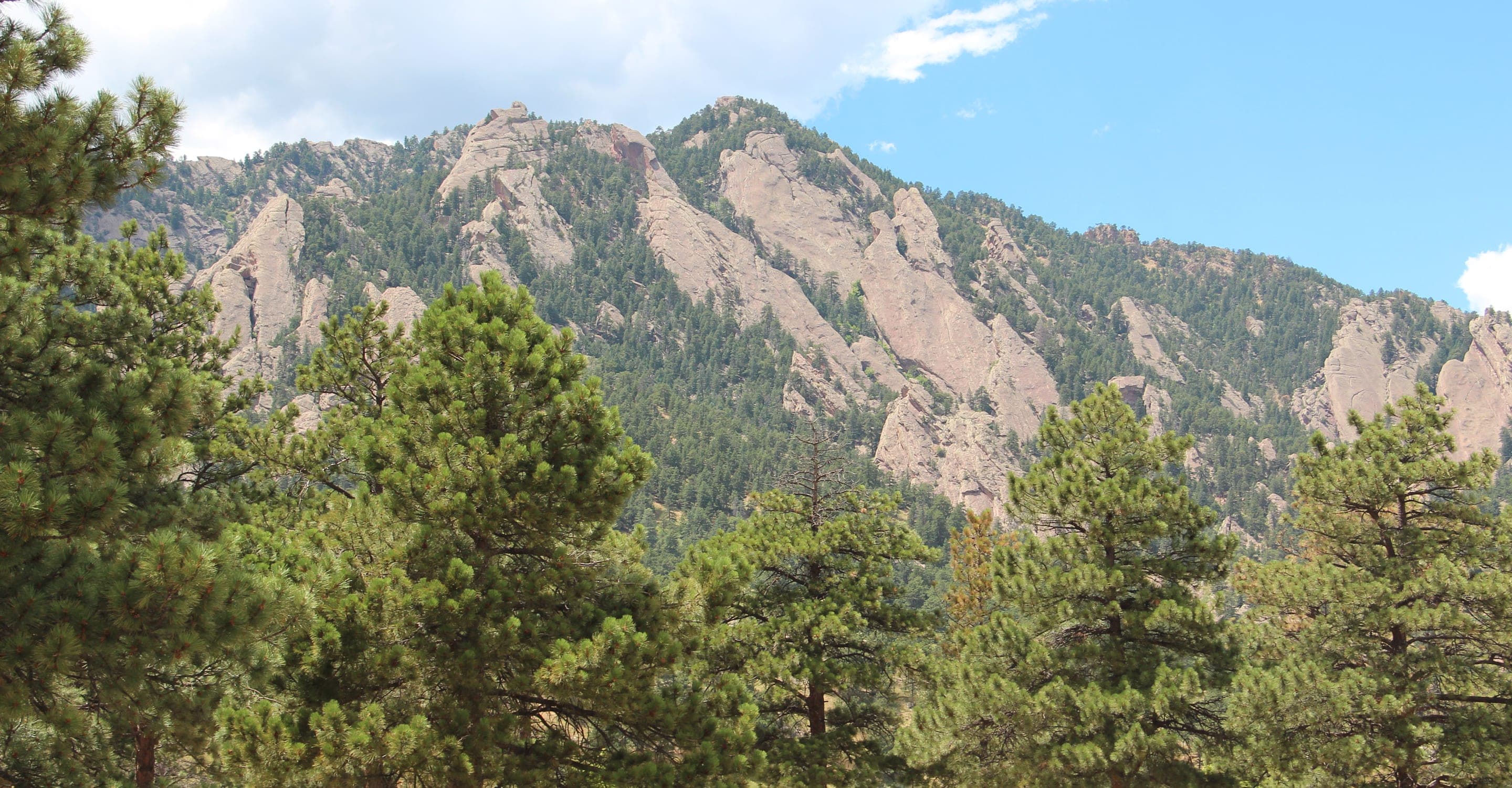
A summer day on the Front Range routinely opens at 45°F in a trailhead lot and hits 75° by noon on the exposed sections, then throws wind, a storm cell, and a 20-degree drop at you above treeline. No single garment covers a 30-degree swing plus weather. That's the entire case for layers: not warmth, but adjustability at the pace you actually hike.
Think of it as three jobs, not three garments. Something against your skin that moves sweat. Something in the middle that holds warmth. Something outside that stops wind and water. Each job scales up or down independently, and the mistake that soaks most hikers is trying to cover all three with cotton, which does none of the jobs once it's wet.
The base layer's one job
The base layer's job is transport, not insulation. Synthetic or wool, light enough that you almost forget it, snug enough that it touches skin. If you finish a climb with a wet shirt clinging to your back, the base layer failed, and everything above it is now insulating water instead of you.
Early starts reward starting slightly cold. If you're comfortable standing in the lot at 6 a.m., you're overdressed for the first climb, and you'll sweat out your insulation inside twenty minutes. Comfortable-after-ten-minutes-of-walking is the calibration that keeps the system dry.
No single garment covers a 30-degree swing plus weather. That's the entire case for layers: not warmth, but adjustability at the pace you actually hike.
The mid is the throttle
The middle layer is where the actual temperature management happens; it's the piece that comes on and off all day, so it should live at the top of your pack, not the bottom. A grid fleece or a light synthetic puffy both work; what matters is that it compresses small and goes on fast over whatever you're wearing. On a Front Range summer day you might touch it three times: off at the first climb, on at the windy saddle, off for the descent, on again the moment you stop moving. If adjusting it feels like a production, you'll skip it, and skipping the throttle is how you end up either soaked or shivering.
Sun counts as weather
Colorado's high-altitude sun is a layer problem as much as a sunscreen one. Above treeline there's no shade to ration your exposure, and the thinner air filters less of it, which is why seasoned alpine hikers cover up as the day warms instead of stripping down. A light, loose long sleeve over the base layer keeps sun off your arms all day without reapplication, and on the exposed sections it's frequently cooler than bare skin taking the full load. And unlike sunscreen, it doesn't wear off mid-afternoon with four exposed miles left.
Wind is the bigger thief
Above treeline, wind is the variable that turns a pleasant 60° into a genuinely cold hour. Moving air strips the warm boundary layer off your skin and out of your fleece: a breathable mid layer that felt perfect in the trees can feel like a screen door on an exposed ridge. That's not a failure; holding warmth in still air is all a mid is built to do.
The fix costs nothing you're not already carrying: the shell. Worn over the mid with the zips open, it blocks the wind while venting the sweat, and the same two layers that were losing the ridge suddenly win it. The skill is reaching for the shell for wind, not just rain. Most days on the Front Range, wind is the reason it comes out of the pack.
The moment you stop
The layering mistake nobody warns you about happens standing still. You arrive at the summit or the lake warm from the climb, sit down to eat, and spend the first ten minutes feeling great. Meanwhile the sweat on your base layer does its evaporative work and your core temperature quietly falls off a cliff. By the time you feel cold, you're playing catch-up with insulation that now has to fight a deficit instead of hold a surplus.
Layer up the moment you stop, before you feel anything. Puffy on at the summit even if it seems silly; it comes off thirty seconds into the descent. The reverse applies at the restart: shed the stop-layer before you start walking, not a quarter mile in when you're already damp again. It feels like fussing. It's the difference between a comfortable lunch above treeline and cutting the best stop of the day short because you're shivering.
The shell is a commitment, not a backup
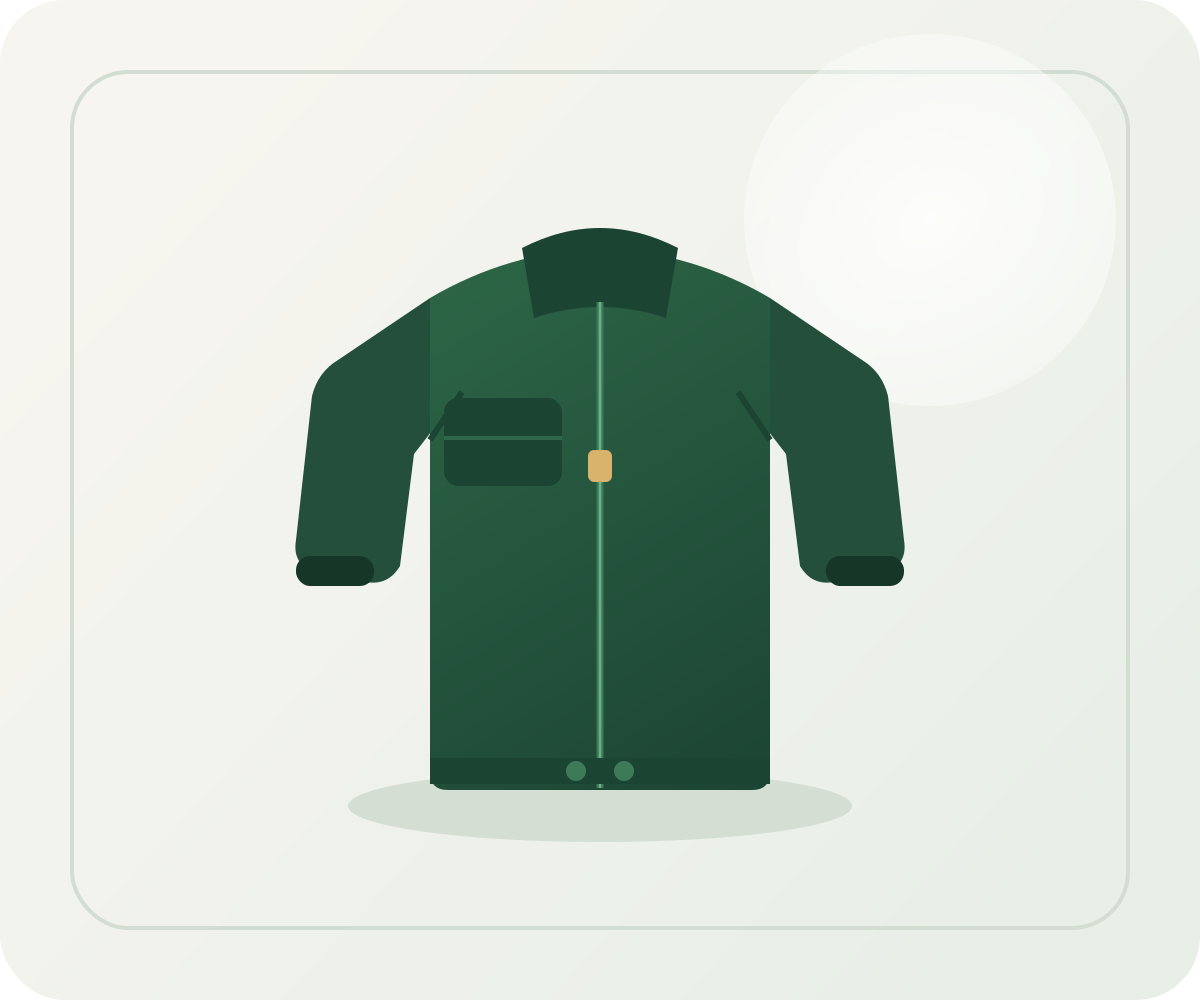
The afternoon storm pattern is the reason the shell earns permanent residence in the pack: build through late morning, break in the early afternoon, hit hardest where you're most exposed. A shell that only exists for emergencies is a garbage bag with sleeves, fine until you have to hike in it. A shell you'll actually wear through weather, like the Packable Rain Shell, is a different tool: rated to breathe at 10k, it can stay zipped through a climbing pace, and at 11.4 ounces packed into its own pocket, a clear forecast is no longer a reason to leave it home.
The working formula for a Front Range summer day, then: base on your skin, mid at the top of the pack, shell underneath it, plus the discipline to use the mid as a throttle instead of a trophy. Stage all three where you can reach them, and adjust as often as the day changes.