What to carry above 11,000 ft.
The safety + repair shortlist that earns its weight on every alpine day.
The altitude where margins thin
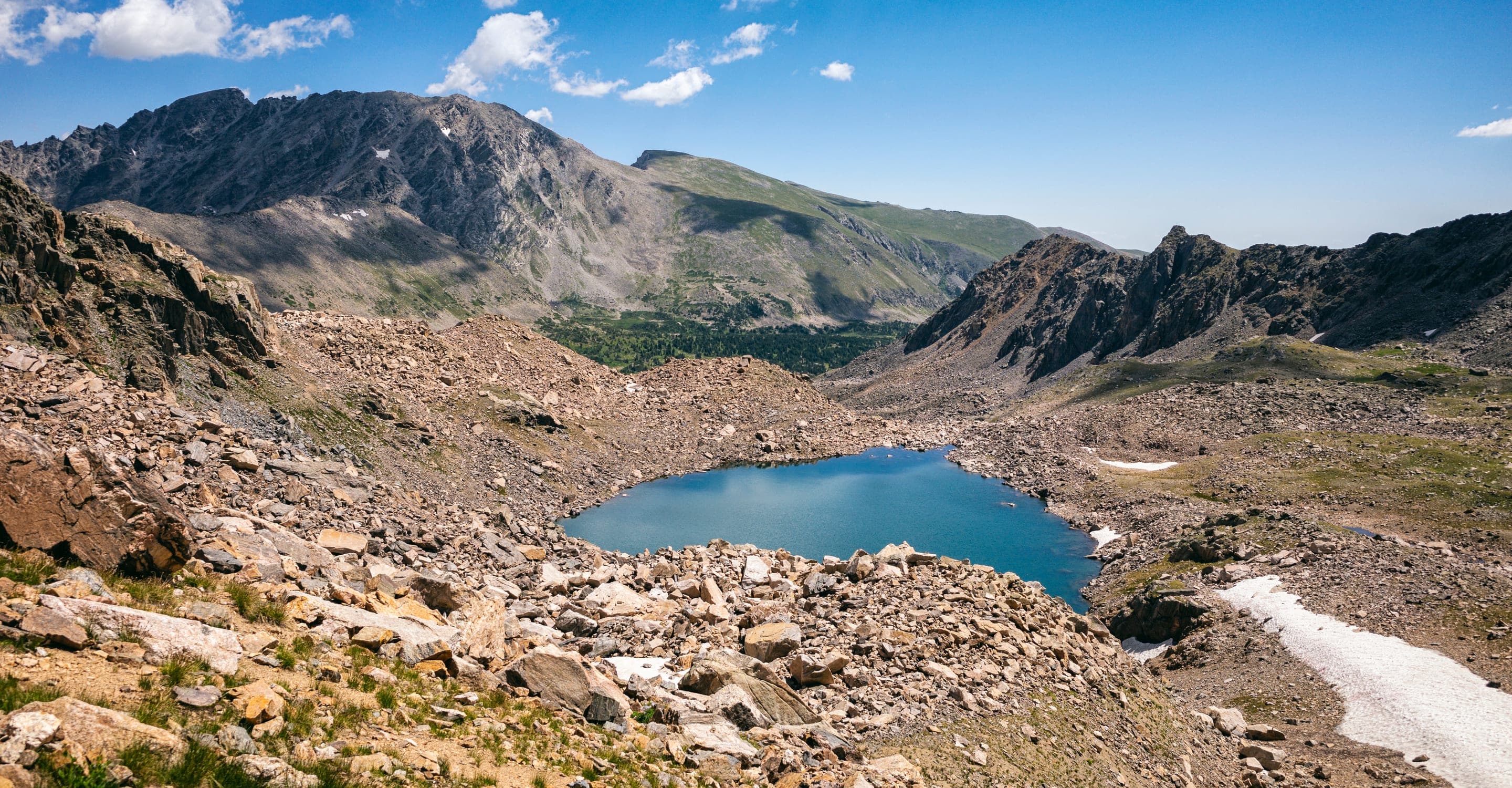
Above 11,000 feet in Colorado you're at or past treeline: no cover from weather or lightning, colder air doing more with every wind mile-per-hour, help further away in both distance and time. The gear answer isn't a bigger pack. It's a short list where every item has a job you can name. If you can't say what saves you, it's dead weight.
Be down before the sky argues
Nothing in the pack protects you above treeline the way the clock does. The Colorado summer pattern of clear mornings and storms building after midday is the reason alpine starts exist: the goal is to be at your high point before the storms organize, and below treeline when they land. That means a turnaround time decided the night before, at home with the map out, never negotiated on the ridge with the summit in view. Summit fever is a real failure mode precisely because the last hour up is when you're least equipped to make the call.
The working discipline: pick the turnaround before you start, tell someone what it is, and treat building clouds as the earlier of the two deadlines. If the sky goes dark ahead of your time, the sky wins. Every item on the shortlist below matters more when timing fails, and the goal is a day where none of it gets used.
The gear answer isn't a bigger pack. It's a short list where every item has a job you can name. If you can't say what saves you, it's dead weight.
The safety shortlist
- Light you didn't plan to use. The alpine-start habit means dark trailheads, but the headlamp's real work is the descent that runs long. "Up to 38 hours on low", the Rechargeable Trail Headlamp's honest spec line, is the difference between a late walk-off and an unplanned night.
- A first aid kit organized for cold hands. Above treeline, the moment you need the kit is windy, cold, and hurried. The Compact First Aid Kit's clamshell-with-dividers layout is the feature that matters up here: a kit you can navigate matters more than a kit that has everything when your hands are working at half speed. At 4.8 ounces, weight is never the reason it stays home.
- The layer you think you won't need. Whatever the valley forecast says, above 11k carries its own weather. An insulating layer beyond your worn set, staged where you can reach it without unpacking, is the item most often skipped and most often missed.
- Navigation that doesn't need bars. Phone maps are excellent until the battery meets cold air. A paper map of the area and a compass weigh nothing; the skill to use them (see the dusk-navigation guide) weighs less.
- Water you can make, not just carry. Alpine basins are generous with lakes and stingy with margin for dehydration headaches at altitude. A 3.4-ounce filter turns those lakes into resupply you don't have to haul uphill.
The repair shortlist
Repair above treeline means finishing the day; the proper fix happens at home. Tape (real repair tape, not a roll of duct tape's worth of good intentions) handles a torn shell, a split pad, a delaminating sole. A few feet wrapped around a pole or bottle costs nothing. A needle and a meter of strong thread ride inside the first aid kit. A spare buckle for your pack's hip belt if your belt uses a side-release: the one failure that turns a pack back into a shoulder bag. And a stub of cord: bootlace, guy line, gear sling, splint tie. None of this list weighs an ounce that isn't earned; all of it turns "trip over" into "trip continued."
What rides on your body
Above treeline, the difference between "in the pack" and "in a pocket" is a real safety distinction. If you and your pack ever part ways (a slip, a dropped pack on a scramble move, or just the pack sitting where lunch happened while you wander for the photo), what's in your pockets is your actual kit. The body list: the map, the whistle, a snack, and your phone somewhere warm, because cold batteries quit at a fraction of their charge and an inside pocket is free insulation.
The same logic ranks the pack itself: things you'll need fast (shell, first aid) live in the lid or an outer pocket; things you'll need at a stop (insulation, food) can ride deeper. Above 11k, fumbling through a stuffed main compartment with cold hands in rising wind is its own small emergency. Organization is warmth you packed in advance.
What stays home
Above-treeline discipline is as much about what you don't carry. The second knife, the third battery bank, the just-in-case items whose scenario you can't articulate: every one of them is weight that makes you slower, and slow is its own exposure above 11k. Ten-essentials thinking is a checklist of jobs to cover: light, warmth, navigation, water, repair, first aid. Cover the jobs with the lightest honest tool for each, and leave the rest in the car. Up high, the pace a light pack allows is protection in its own right.