San Juans fall color: where the aspens hold longest.
The 7-day window most visitors miss, and the three drives that put you inside it.
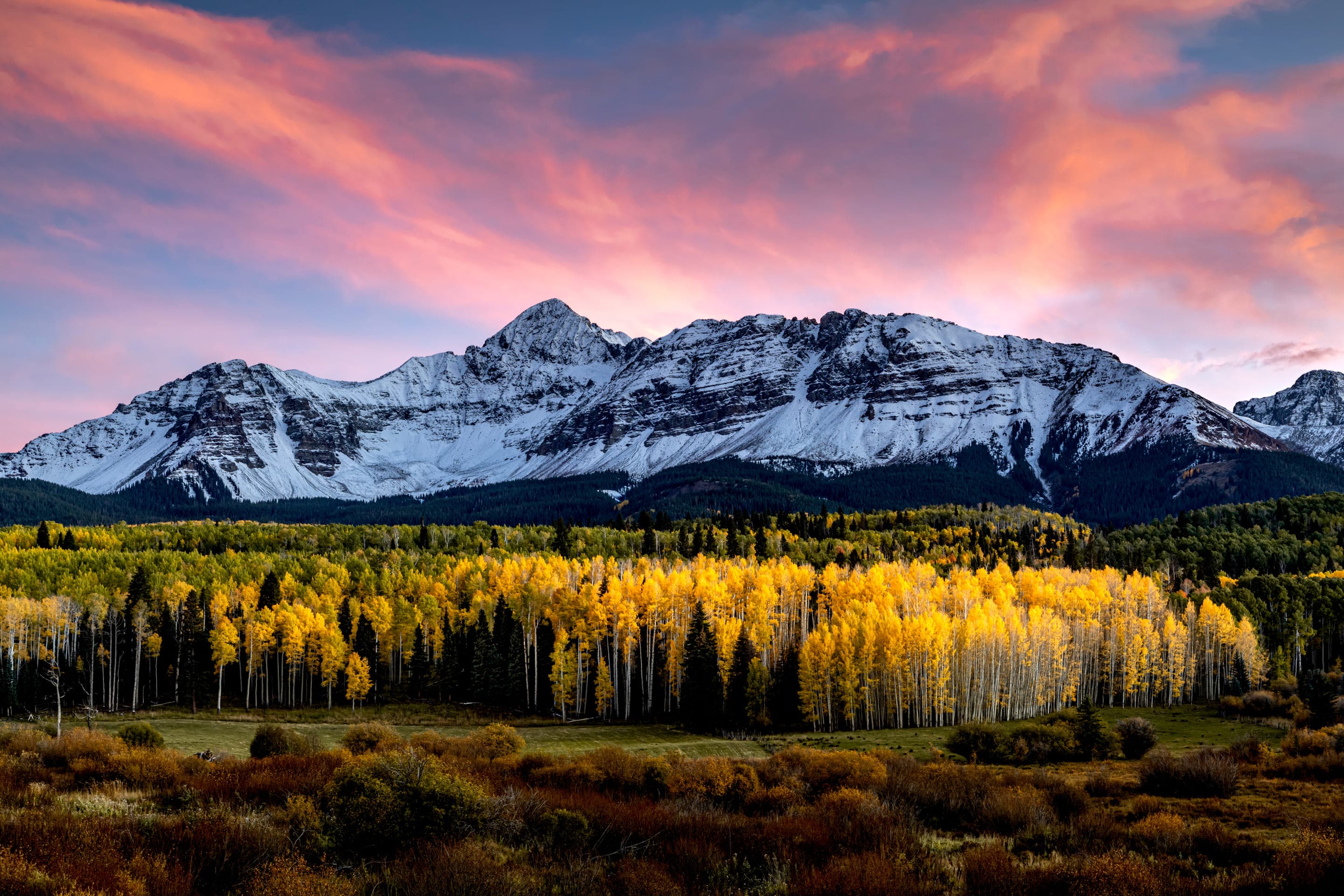
The window is real, and it's short
Colorado fall color has a reputation for being a September show, and by the calendar most of it is. But the San Juans sit far enough south, with aspen stands running across such a wide band of elevations, that the show there runs late: the last week of September into the first days of October is when the low- and mid-elevation stands typically peak, right as the crowds who booked around the middle of the month are clearing out. That trailing week is the window most visitors miss. It moves year to year with the weather (a warm fall stretches it; an early hard freeze or a windstorm can end it overnight), which is exactly why the strategy is to aim late and stay flexible.
Elevation is your dial. Color moves downhill through the season, so if the high stands have already gone bare, drop lower; if the valley stands are still green, climb. In a range with this much vertical, some band is peaking for the better part of three weeks; the seven-day window is when the big mid-elevation stands go all at once.
Three drives that put you inside it
- Dallas Divide, on CO-62 west of Ridgway. The classic: the highway crests a broad saddle where huge aspen benches roll up toward the Sneffels Range, and the scene faces you like a gallery wall. Pull over, stand in it, and arrive for first light if you want the peaks lit and the valleys still brimming with cold air.
- The Million Dollar Highway, US-550 between Ouray and Silverton. Color in a canyon: the aspens hang off the walls above and below the roadway, so peak week here feels less like viewing color and more like driving through the middle of it. Take it slow, use the pullouts, and remember the road demands a driver's full attention; the passenger gets the show on this one.
- Lizard Head Pass, on CO-145 south of Telluride. The quieter third option: long meadow approaches, big stands sweeping up toward the peaks, and trailheads scattered along the corridor if you want to get under the trees. No two of these corridors reliably peak in the same week, which makes this the flexibility play: if one has already turned, drive another.
Elevation is your dial. Color moves downhill through the season, so if the high stands have already gone bare, drop lower; if the valley stands are still green, climb.
Make a day of it on foot
The drives deliver the panoramas; an hour inside a peak-week aspen stand delivers the place itself: the light goes gold on the ground, and a breeze turns the whole canopy into applause. Any corridor trailhead into a big stand will do it. Walk in far enough that the road noise drops away, find a log, and stay ten minutes past when you meant to leave. For the gear side, the swing-day logic from our layering guide applies directly: mornings usually start at or below freezing at these elevations in late September, afternoons can be shirtsleeve, and the swing between them is the packing list.
Before you build the trip around a date, check current color reports and conditions with local ranger districts or visitor centers; peak timing shifts with each year's weather, and high-country conditions change fast in the fall.