Sneffels in the monsoon: timing your summit window.
Why 5am works in July, what to read off the morning sky, and when to turn around.
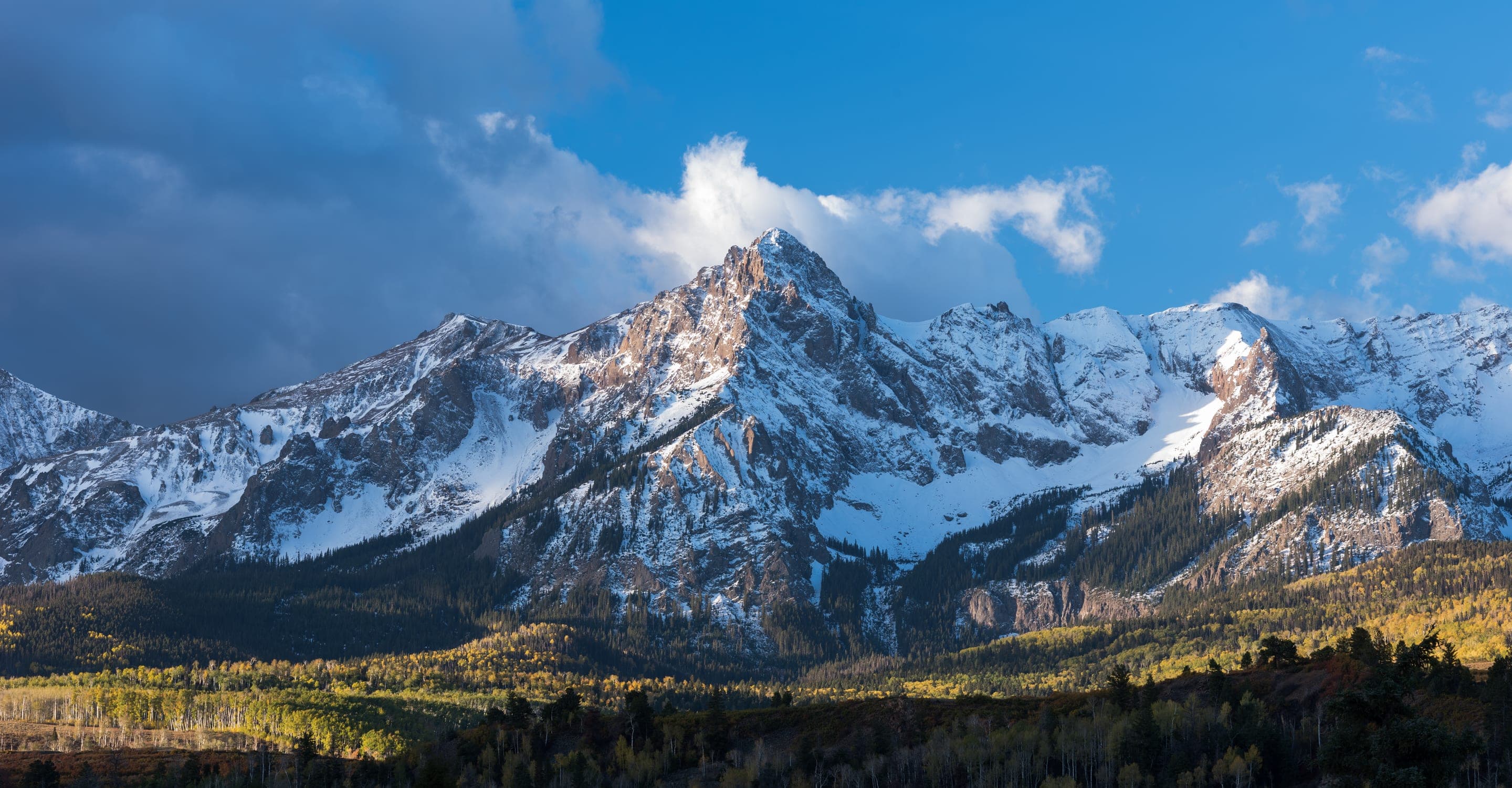
The monsoon owns July afternoons
Mount Sneffels anchors the northern San Juans above Ouray and Telluride, and in high summer the range answers to a rhythm imported from a thousand miles south: the North American monsoon. From roughly early July into early September, moist air streams up from the south, and the San Juans, the first of Colorado's high country it reaches, convert it into afternoon thunderstorms with a regularity you can nearly set a watch by. The mornings, though: cold, clear, and still. Everything about a monsoon-season summit comes down to fitting your day inside that morning.
A 5 a.m. trailhead start is simple scheduling. High-altitude storm risk climbs steeply after midday, the going above treeline is slow, and the descent back to cover takes real time. Start at five and you're on top mid-morning with margin on the clock; start at eight and the same route puts you at the most exposed point of the day exactly as the sky gets serious.
The morning sky briefs you
The monsoon telegraphs its intentions early, and the pre-dawn drive is your first weather station. A sky full of stars at 4:30 says the airmass is dry for now. High thin streaks catching the first light, moisture already moving in aloft, say the afternoon build will come earlier than usual. And if you can see towers on the horizon at sunrise, yesterday's storms never fully died overnight; those days the window is short or already closed.
On the mountain, keep reading. Small puffy clouds appearing mid-morning are the first visible step of the day's convection; watch whether they sit still or start growing. Growth by 10 a.m. means the schedule has moved up on you. The rule that keeps people alive up high is the same one we put in the above-11k guide: pick the turnaround time at home, and treat a building sky as the earlier of your two deadlines.
Everything about a monsoon-season summit comes down to fitting your day inside that morning.
The turnaround, decided in advance
The monsoon-season turnaround has a specific shape: it lands when the summit already looks close. That's what makes it hard, and why it can't be a decision you make up there. Three triggers, any one of which turns you around: your pre-picked clock time arrives; you hear thunder, however distant, because thunder travels and so do storms; or the clouds overhead have gone from white to gray-bottomed and vertical. Above treeline you are the tallest thing around; no summit photo is worth that trade.
Then build the retreat into the kit itself. The shell goes into the pack first all monsoon season, a warm layer comes along on every July day no matter the valley forecast, and a headlamp that can run all night (the Rechargeable Trail Headlamp's low mode is rated for up to thirty-eight hours) turns a slow storm-delayed descent from an emergency into an inconvenience.
Snowfields linger on high San Juan routes well into summer some years, and route conditions vary. Check with the local land manager or ranger district for current conditions before you commit to a summit day.